

How we got here
China is likely to be a more powerful competitor than the Soviet Union was in its prime.

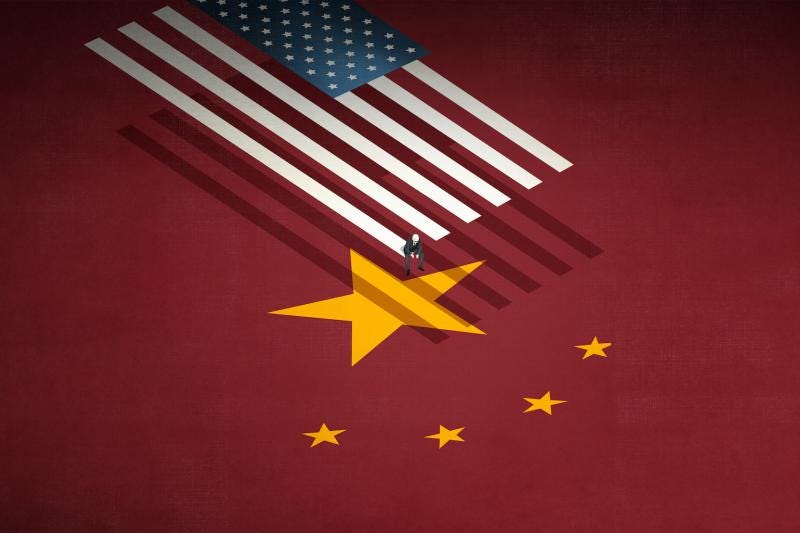
It was a momentous choice. Three decades ago, the Cold War ended, and the United States had won. It was now the sole great power on the planet. Scanning the horizon for threats, U.S. policymakers seemed to have little cause for concern—and especially not about China, a weak and impoverished country that had been aligned with the United States against the Soviet Union for over a decade. But there were some ominous signs: China had nearly five times as many people as the United States, and its leaders had embraced economic reform. Population size and wealth are the main building blocks of military power, so there was a serious possibility that China might become dramatically stronger in the decades to come. Since a mightier China would surely challenge the U.S. position in Asia and possibly beyond, the logical choice for the United States was clear: slow China’s rise.
Instead, it encouraged it. Beguiled by misguided theories about liberalism’s inevitable triumph and the obsolescence of great-power conflict, both Democratic and Republican administrations pursued a policy of engagement, which sought to help China grow richer. Washington promoted investment in China and welcomed the country into the global trading system, thinking it would become a peace-loving democracy and a responsible stakeholder in a U.S.-led international order.
Of course, this fantasy never materialized. Far from embracing liberal values at home and the status quo abroad, China grew more repressive and ambitious as it rose. Instead of fostering harmony between Beijing and Washington, engagement failed to forestall a rivalry and hastened the end of the so-called unipolar moment. Today, China and the United States are locked in what can only be called a new cold war—an intense security competition that touches on every dimension of their relationship. This rivalry will test U.S. policymakers more than the original Cold War did, as China is likely to be a more powerful competitor than the Soviet Union was in its prime. And this cold war is more likely to turn hot.