

The Shadow of Death and the Light of Life
A Biblical Reflection on Charlie Kirk’s Assassination and America’s Growing Darkness

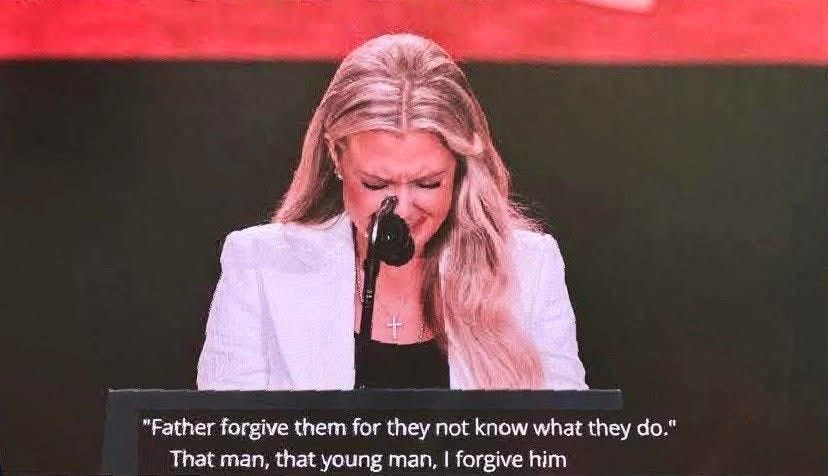
In the early days of September 2025, the nation was rocked by the tragic assassination of Charlie Kirk, a prominent conservative voice and founder of Turning Point USA. Shot during a speaking event at Utah Valley University, Kirk’s death at the hands of Tyler Robinson—a young man whose motives appear entangled in ideological rage—has unveiled a chilling undercurrent in American society. What is perhaps even more disturbing than the act itself is the wave of celebration that followed in certain corners of the internet and public discourse.
Social media threads, once filled with critiques of Kirk’s outspoken views on topics ranging from civil rights to cultural values, quickly devolved into gleeful mockery of his demise. Some posters, echoing the very statements attributed to Kirk that they decried—such as his criticisms of affirmative action, his defense of colonial history, or his warnings about cultural shifts—seemed to justify violence as a response to disagreement. This is not mere political discord; it is a manifestation of what can only be described as a “death culture” rising in America, one that diminishes the sanctity of human life, celebrates destruction, and even harbors ongoing threats against figures like President Trump.
From a strict Biblical worldview, this moment demands not outrage alone, but a sober assessment of the human heart and the spiritual forces at play. The Bible teaches that every person is made in the image of God (Genesis 1:27), imbued with inherent dignity and worth. This imago Dei is the foundation for why murder is not just a crime, but a profound violation against the Creator Himself. “Whoever sheds human blood, by humans shall their blood be shed; for in the image of God has God made mankind” (Genesis 9:6).
Yet, in a culture increasingly untethered from this truth, we see a growing disregard for life—evident in the casual endorsement of violence, the normalization of abortion, and the dehumanization of opponents. The assassin’s motivations, as pieced together from reports, appear rooted in a deep-seated hatred fueled by ideological division. But Scripture invites us to look deeper: such actions stem from a heart ensnared by sin and influenced by dark demonic forces.
The Apostle Paul warns in Ephesians 6:12 that “our struggle is not against flesh and blood, but against the rulers, against the authorities, against the powers of this dark world and against the spiritual forces of evil in the heavenly realms.” Those who have not experienced the spiritual rebirth Jesus described to Nicodemus in John chapter 3—”Very truly I tell you, no one can see the kingdom of God unless they are born again” (John 3:3)—remain vulnerable to these influences.
Without this new birth, the human heart is like the “heart of stone” prophesied in Ezekiel 36:26: unyielding, cold, and prone to destruction. God promises, “I will give you a new heart and put a new spirit in you; I will remove from you your heart of stone and give you a heart of flesh.” This transformation is not a mere moral upgrade; it is a divine intervention that aligns us with God’s purposes, enabling us to resist the sway of evil and to value life as He does.
Logically observed, this “death culture” thrives in a society where God is sidelined. When individuals reject the Author of Life (Acts 3:15), they open the door to chaos. The celebrations of Kirk’s death—often from those who posted lists of his controversial statements as if to rationalize murder—reveal a motivation not just political, but profoundly spiritual: a rebellion against the order God designed.
Hatred festers where love is absent, and as Jesus taught, “Anyone who hates a brother or sister is a murderer” (1 John 3:15). This extends to the persistent threats against President Trump and others, reflecting a broader erosion of regard for human life. Demonic forces exploit this, whispering lies that violence brings justice, division fosters progress, and death silences truth.
Yet, history and Scripture show that such paths lead only to greater darkness, as seen in the cycles of vengeance in ancient Israel or the tyrannies of godless regimes.
But there is hope, and it lies in understanding our intended design as God’s creation. We are made for relationship—first with our Creator, then with one another. The Great Commandment encapsulates this: “Love the Lord your God with all your heart and with all your soul and with all your mind... And... love your neighbor as yourself” (Matthew 22:37-39).
This dual love is the blueprint for human flourishing, fostering communities where disagreement doesn’t devolve into destruction, where life is protected from womb to tomb, and where forgiveness triumphs over retribution. Yet, as fallen beings in a broken world, we cannot achieve this on our own.
Our natural inclinations pull us toward self-interest, division, and yes, even death. It is impossible to live out this divine relational ideal without a saving relationship with Christ Jesus—the “author and perfecter of our faith” (Hebrews 12:2), the Name above all names (Philippians 2:9), and the King of kings (Revelation 19:16).
Jesus alone bridges the gap. Through His death and resurrection, He offers the new birth that softens stony hearts, empowers us to love enemies (Matthew 5:44), and equips us to stand against evil. In Christ, we find the strength to mourn losses like Kirk’s not with vengeful calls, but with prayers for repentance and renewal.
We can engage culture winsomely, speaking truth in love (Ephesians 4:15), and modeling the unity God desires. Imagine an America where reborn hearts lead to policies that honor life, dialogues that bridge divides, and a society that reflects God’s kingdom.
If the shadows of this “death culture” weigh on you, consider the invitation of Christ: “Come to me, all you who are weary and burdened, and I will give you rest” (Matthew 11:28). Turn to Him, be reborn, and step into the light of true life. In doing so, we not only resist the darkness but become beacons of hope in a weary world.
❤️🙏❤️