

Wildfire Dynamics and Suppression
Wildfires rage in LA, fueled by fierce winds and dry conditions. Discover how weather dictates firefighting strategies in this review of wildland fire suppression procedures.

Introduction
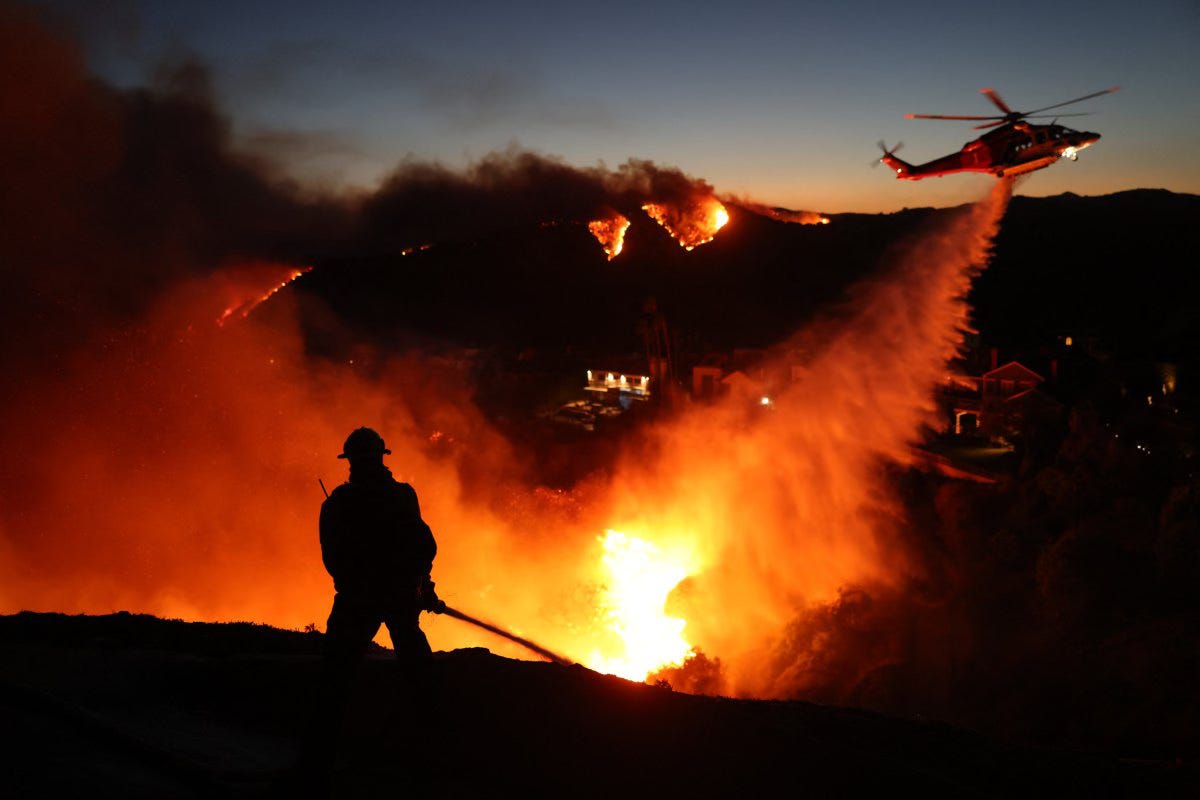
Starting from Tuesday, January 7, 2025, Los Angeles has been grappling with intense wildfires that have threatened residential areas, fueled by a unique combination of weather conditions. This article delves into the specific weather characteristics affecting fire behavior and evaluates various fire suppression methods employed during this crisis.
Weather Characteristics Affecting Fire Intensity and Spread:
Temperature:
High temperatures have been a significant factor, with daytime temperatures reaching into the high 70s to low 80s Fahrenheit. Warm temperatures dry out vegetation, making it more susceptible to ignition and rapid fire spread.
Fuel Loading:
The area has seen an accumulation of dry, dead vegetation due to prolonged dry periods, providing ample fuel for fires. The type and density of vegetation, including chaparral and grasslands around residential areas, have exacerbated fire behavior.
Humidity:
Humidity levels have dropped significantly, with relative humidity often falling below 20%. Low humidity means less moisture in the air and vegetation, which leads to faster fire spread and higher intensity.
Wind Gust Speed:
Wind gusts have been recorded up to 60 mph, particularly with the influence of Santa Ana winds. These gusts can carry embers over long distances, starting new fires ahead of the main fire front, a phenomenon known as spotting.
Sustained Wind Speed and Direction:
Sustained winds have been blowing from the northeast at speeds of 20-30 mph, pushing fires towards urban areas. The consistent direction of these winds has directed fire spread towards residential zones.
Dominance of "Fire Weather" Conditions:
The combination of high temperatures, low humidity, and strong winds has created what meteorologists refer to as "fire weather" - conditions ideal for rapid fire growth and spread. These conditions have been persistent since early January, contributing to the severity of the current wildfires.
Other Factors:
The terrain in and around Los Angeles, with its canyons and hills, can create microclimates that enhance fire behavior. Additionally, the urban-wildland interface where homes meet natural landscapes has created pathways for fire spread into populated areas.
Fire Suppression Methods:
Creating Fire Breaks:
Effective when done early and in strategic locations. Fire breaks can stop or slow down fires if they are wide enough and devoid of flammable material. However, in high wind conditions, embers can jump these breaks, reducing their effectiveness.
Helicopters Dropping Water:
Can be very effective for spot fires or to protect specific structures. However, the effectiveness decreases in high winds due to water dispersal and evaporation.
Helicopters Dropping Retardant:
Similar to water drops but retardants can coat fuels, slowing the spread of fire. However, coverage can be patchy in strong winds, and retardants are less effective once the fire has established a deep burn.
Super Scoopers Harvesting Water:
These planes are exceptionally useful for quickly refilling and dropping large volumes of water from nearby water bodies. Their effectiveness is maximized in areas close to water sources, but like other aerial methods, high winds can reduce precision and coverage.
Large Fixed Wing Aircraft Dropping Retardant:
They can cover large areas quickly, ideal for creating lines to contain fire spread from afar. The downside is the need for sustained flight operations and the potential for less accuracy in high-wind scenarios.
Smaller Fixed Wing Aircraft Dropping Retardant:
More maneuverable than larger aircraft, useful for targeting smaller or more spread-out fires. However, they carry less retardant, necessitating more frequent returns to base.
Other Mitigation Procedures:
Preemptive evacuations, community education on fire safety, and the use of prescribed burns to reduce fuel loads before fire season starts are key. Also, community-based programs like Firewise USA encourage residents to manage vegetation around homes to create defensible spaces.
The wildfires in Los Angeles starting from January 7, 2025, have been driven by a potent mix of weather conditions that have both intensified the fires and accelerated their spread into residential areas. While various suppression methods have been employed, their effectiveness varies greatly with weather conditions, especially wind. Understanding these dynamics is crucial for both immediate response and long-term planning to mitigate future wildfire threats. Community preparedness, strategic fire management, and adaptive suppression techniques remain vital in facing such natural challenges.
Wildland Fire Suppression Strategies
Low Wind Conditions (Below 15 mph):
Priority 1: Aerial Retardant Drops - When winds are low, both large and small fixed-wing aircraft can effectively drop retardants to coat vegetation, forming a barrier against fire spread. This method is prioritized to create containment lines.
Priority 2: Helicopter Water Drops - With calm conditions, helicopters can accurately target water drops on hotspots or structures at risk, enhancing the effectiveness of retardant lines.
Priority 3: Fire Breaks - These can be established with more precision and effectiveness when winds are not dispersing embers, helping to contain the fire’s perimeter.
Priority 4: Ground Crews - Direct firefighting by ground personnel can be more effective, focusing on mop-up operations and reinforcing fire lines.
Moderate Wind Conditions (15-30 mph):
Priority 1: Fire Breaks and Backburning - With winds picking up, creating wide fire breaks and controlled burns to deplete fuel ahead of the fire becomes crucial.
Priority 2: Large Fixed Wing Aircraft for Retardant - Larger planes are still somewhat effective but focus on broader areas rather than precision drops.
Priority 3: Helicopter Operations - Both water and retardant drops should be used cautiously, focusing on areas where the wind's direction can be utilized to spread retardant across fire paths.
Priority 4: Evacuation and Public Safety - Ensuring the safety of residents might take precedence as fire behavior becomes less predictable.
High Wind Conditions (Above 30 mph):
Priority 1: Evacuation and Safety Measures - High winds can make aerial operations dangerous and less effective, thus the primary focus shifts to evacuating people from danger zones and ensuring safety.
Priority 2: Ground-Based Fire Management - Firefighters on the ground will focus on protecting structures and key infrastructure, using fire-resistant wraps or setting up sprinklers where feasible.
Priority 3: Cease Aerial Operations - All aerial retardant and water drops are generally halted due to the risk of wind dispersing or misdirecting drops.
Priority 4: Strategic Monitoring - Use of drones or remote sensors for monitoring fire progression without risking human life or equipment, adjusting strategies based on real-time data.
Extreme Conditions (High Wind, Low Humidity, High Temperature):
Priority 1: Immediate Evacuation - The combination of these factors can lead to extremely aggressive fire behavior, making evacuation the top priority.
Priority 2: Defensive Positioning - Firefighters might adopt defensive tactics, focusing solely on protecting life and property rather than attempting to control the fire's spread.
Priority 3: Resource Conservation - Conservation of resources for post-fire recovery and for use when conditions improve.
Priority 4: Aerial Operations on Hold - All aerial firefighting is ceased until conditions improve, with only ground-based monitoring continuing.
The effectiveness of fire suppression methods is highly dependent on prevailing weather conditions. By dynamically adjusting priorities based on wind speed, humidity, temperature, and other meteorological factors, fire services can optimize their response, protect lives and property, and reduce the environmental impact of wildfires. Understanding these dynamic conditions allows for a more strategic and effective use of resources when fighting wildfires in varied and potentially dangerous weather scenarios.